If there's one change that improves most Australian lawns, it's mowing a little higher. Short, scalped lawns look neat for a day or two, but they're more stressed, dry out faster and give weeds space to move in. Every grass has a height range at which it grows best, and staying within it, while never taking off too much at once, keeps the lawn thick and resilient. This guide gives recommended heights for common warm-season grasses and explains the one-third rule.
30–50mm
Buffalo and kikuyu
Townsville City Council lawn species fact sheet
⅓
Most to remove per mow
Turf Queensland
3cm+
Minimum lawn height
Queensland Government water-wise advice
Recommended heights by grass type
The table below shows recommended mowing heights from Townsville City Council's lawn species fact sheet. They're a useful guide for common warm-season grasses across much of Australia. Specific varieties can differ, so check any advice that came with your turf.
| Grass | Recommended height |
|---|---|
| Buffalo (soft-leaf types) | 30–50mm |
| Kikuyu | 30–50mm |
| Carpet grass | 30–50mm |
| Green couch | 15–30mm |
| Queensland blue couch | 15–30mm |
| Zoysia japonica | 15–30mm |
| Seashore paspalum | 15–30mm |
| Manila grass | 10–20mm |
Not sure what grass you have? Buffalo has broad, flat, often soft leaves and spreads by thick runners above ground. Kikuyu is a vigorous, bright green grass with fairly coarse leaves that spreads rapidly by runners above and below ground. Couch has fine leaves and a dense, low habit. Zoysia is fine to medium-leafed, dense and slow-growing. A local turf supplier or nursery can identify a sample.
Use our planner
Our mowing height planner does the maths for you. Choose your grass and enter its current height, and it shows a target height, the lowest you should cut this time under the one-third rule, and how many mows it takes to get there.
The one-third rule
Turf Queensland advises never removing more than one-third of the grass blade in one mow. The leaf is where the plant makes its food, so cutting off too much at once shocks it, slows its recovery and can expose the stems and runners to sun and heat.
Working out the lowest cut is simple:
| Grass height now | Lowest cut this mow |
|---|---|
| 45mm | 30mm |
| 60mm | 40mm |
| 75mm | 50mm |
| 90mm | 60mm |
| 120mm | 80mm |
In practice, it means mowing more often when the grass is growing fast, such as in a warm, wet summer, and less often when growth slows.
Bringing an overgrown lawn back down
Holidays, rain and busy weeks happen, and sometimes the lawn gets away from you. Resist the temptation to drop the mower to its lowest setting and cut it all back in one go. That can leave a brown, scalped lawn that takes weeks to recover.
Instead, Turf Queensland recommends reducing an overgrown lawn in stages. Take off no more than a third, wait a few days for the grass to recover, then take off another third, until you're back within the recommended range. For example, a buffalo lawn that's grown to 120mm might be cut to 80mm, then about 55mm, then 40mm over a week or two.
If the grass is very long, a petrol mower or a professional may be needed for the first cut, as battery mowers can struggle.
Mowing higher in stress
The Queensland Government's water-wise lawn care advice says to keep your lawn at least 3cm high, avoid mowing in the hottest part of the day, and check your blades, because a clean cut means the lawn loses less water. Taller grass shades the soil, which helps reduce evaporation and keeps roots cooler.
Turf Queensland likewise suggests raising the cutting height when the lawn is under stress. As a rule of thumb, mow towards the top of the recommended range:
- in hot, dry weather and drought;
- in shaded areas, where grass needs more leaf to capture light;
- on lawns with heavy foot traffic or pets;
- heading into winter, when growth slows.
Our heat and drought guide explains more.
Scalping and when it's used
Scalping means mowing very low to remove built-up thatch, the layer of dead and living stems between the soil and the green leaves. Some lawn owners scalp couch or kikuyu at the start of the growing season to reset the lawn. It's a stressful process for the grass and doesn't suit every type, so check advice specific to your grass and variety before trying it, and never scalp in heat, drought or shade.
Measuring your mower's height
Mower height settings are often numbered 1 to 7 or similar rather than labelled in millimetres. To find out what each setting actually cuts:
- Park the mower on a flat, hard surface such as a driveway.
- Disconnect the spark plug lead or remove the battery.
- Measure from the ground to the bottom of the blade at each setting.
Alternatively, mow a test strip and measure the grass with a ruler straight afterwards. Write the results on a label inside the shed for next time.
On bumpy lawns, the mower may scalp high spots. Raise the height a setting or two, or top-dress low spots over time to even out the surface.
Mowing frequency
How often to mow depends on the grass, the season and the weather rather than the day of the week. As a broad guide, mow often enough that you're never taking off more than a third. Townsville City Council's mowing advice for its tropical climate notes that grass grows rapidly in the wet season and needs mowing more often, while in winter it suggests mowing only when necessary. Southern lawns follow a similar pattern with growth peaking in late spring and summer.
Other tips for a better cut
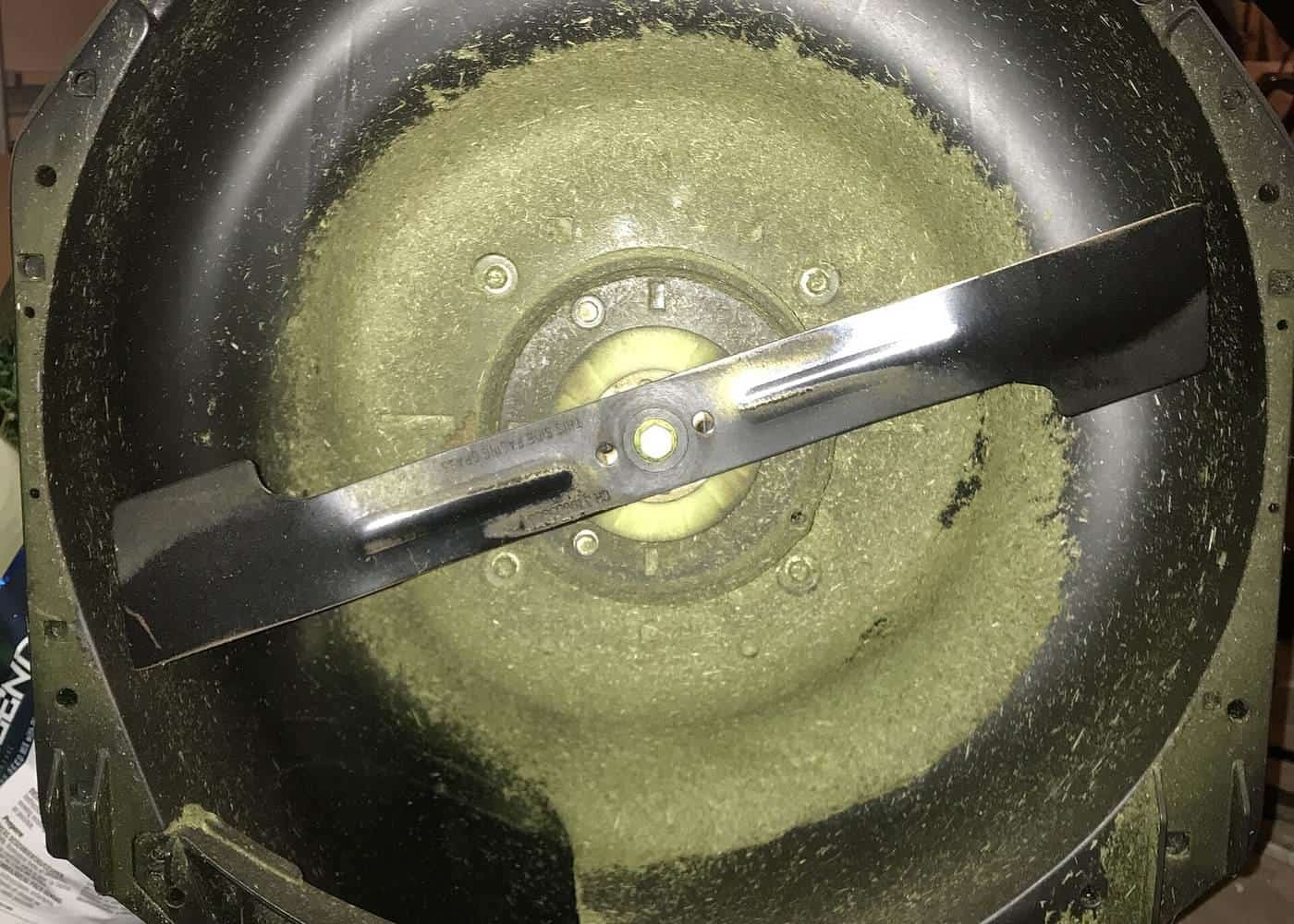
- Keep the blade sharp. A blunt blade tears grass, leaving ragged, brown tips. See sharpening mower blades.
- Mow dry grass for a cleaner cut and less clogging.
- Change direction each time you mow, so the grass doesn't lean one way and the wheels don't wear ruts.
- Overlap passes slightly to avoid missed strips.
- Deal with clippings well. Our clippings guide explains when to catch and when to mulch.
Shade and high-traffic areas
Lawn under trees or beside tall fences gets less light, so the grass needs more leaf to make its food. Mowing these areas at the top of the recommended range, and less often, helps them stay thicker. Areas with heavy foot traffic, such as paths to the clothesline or where dogs run along the fence, also benefit from a slightly higher cut. If grass keeps thinning in deep shade despite good care, a more shade-tolerant grass or a mulched garden bed may be a better long-term answer.
Key points
- Every grass has an ideal height range; buffalo and kikuyu are kept higher than couch and zoysia.
- Never remove more than a third of the blade in one mow.
- Bring overgrown lawns down gradually over several mows.
- Mow higher in heat, drought, shade and heading into winter.
- Check what your mower's height settings actually cut.
Frequently asked questions
What height should I mow buffalo grass?
Townsville City Council's lawn species fact sheet recommends 30–50mm for buffalo. Check the advice for your specific variety, and mow towards the higher end in heat, drought or shade.
What's the one-third rule?
Never remove more than one-third of the grass blade in a single mow. Turf Queensland recommends this to avoid stressing the lawn. If the grass is 60mm tall, don't cut lower than 40mm.
How do I fix a lawn that's grown too long?
Bring it down gradually over several mows, taking no more than one-third each time and allowing a few days' recovery between cuts, as Turf Queensland advises.
How do I measure my mower's cutting height?
Park the mower on a hard flat surface and measure from the ground to the bottom edge of the blade, or measure the grass straight after mowing. Mower height settings are often numbered rather than in millimetres.
Should I mow lower in winter?
Generally no. Warm-season grasses grow slowly in winter, and many councils and turf groups advise mowing less often and a little higher heading into the cooler months.
Sources and further reading
Facts on this page were checked against these primary and official sources. Conditions change — confirm before you travel or buy.
- Lawn species fact sheet (PDF) — Townsville City Council
- Turning grass into lawn – mowing tips — Turf Queensland
- Lawn care — Queensland Government