The blade is the part of the mower that actually does the work, yet it's often the most neglected. A blunt blade doesn't slice grass: it bashes and tears it, leaving ragged tips that brown off and lose more water. The Queensland Government's lawn care advice makes the point directly: check your mower blades, because a clean cut means the lawn loses less water. This guide shows you how to remove, sharpen, balance and refit the blade on a typical rotary mower, and when to replace it instead.
Clean cut
Less water lost
Queensland Government lawn care advice
Disconnect
Before touching the blade
Spark plug lead off, or battery out
Balance
After every sharpen
An unbalanced blade causes vibration
Signs your blade needs attention
- Ragged grass tips. Look closely at the lawn a day or two after mowing. Clean-cut grass has neat ends; torn grass has frayed, white or brown tips.
- Uneven cut. Strips or tufts left behind can mean a blunt or damaged blade, though they can also be caused by mowing too fast or wet grass.
- More vibration. A bent or unbalanced blade often makes the handle buzz.
- Visible damage. Rounded, nicked or folded edges, cracks, or a bend you can see when you sight along the blade.
- The mower bogs down in grass it used to cut easily.
Types of blades
Most walk-behind rotary mowers in Australia use either:
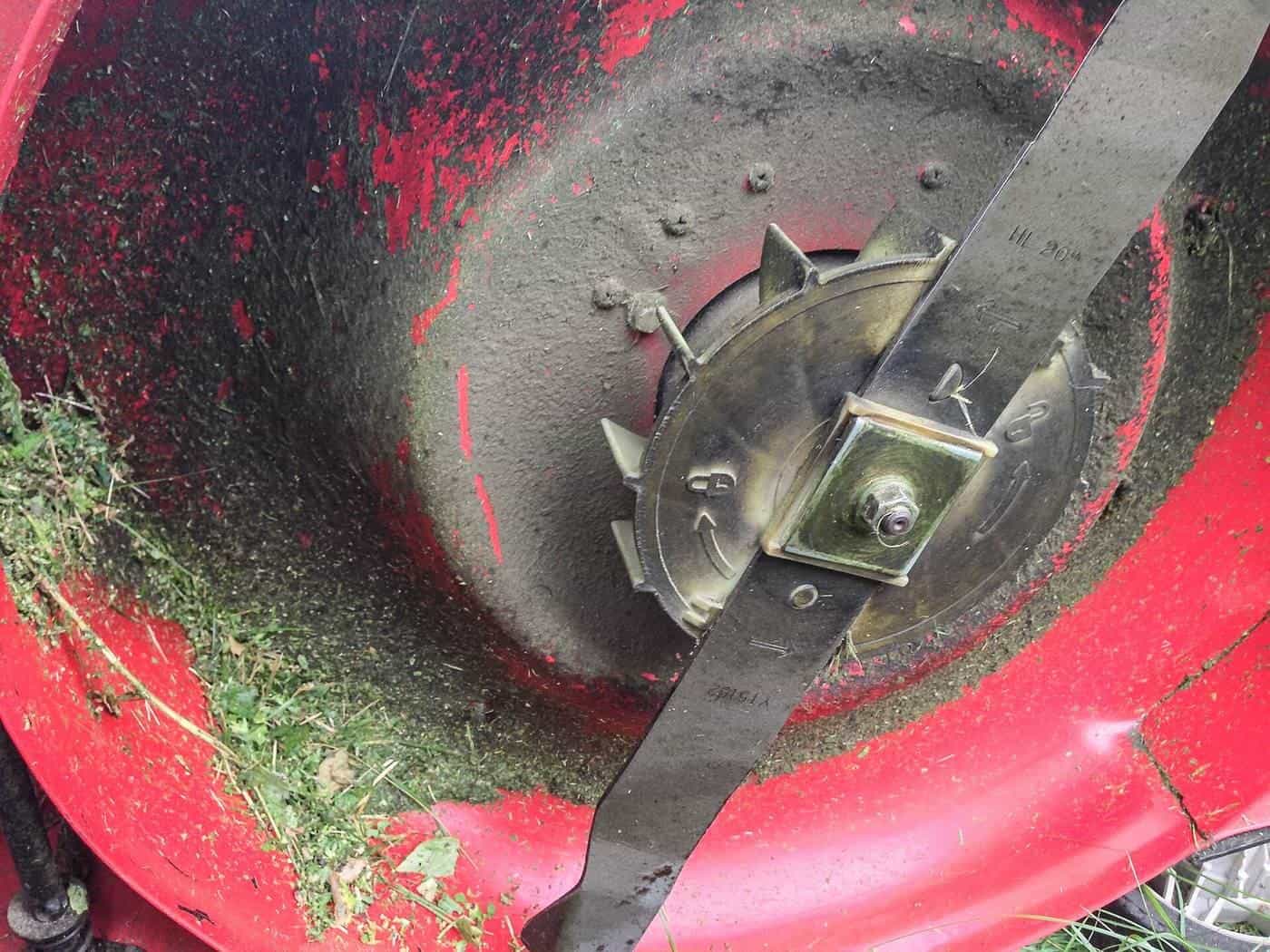
- A single bar blade: one long steel blade bolted through the middle, with cutting edges at each end and a raised back edge, often called the sail or lift, that creates airflow.
- Two or four smaller blades on a disc or bar, sometimes called swing-back blades, which pivot if they hit something.
Mulching blades have extra curves and cutting surfaces. Robot mowers use small razor-like blades that are usually replaced rather than sharpened. Reel or cylinder mowers, like old push mowers and fine-turf machines, use a completely different system that needs specialist sharpening and adjustment.
This guide focuses on rotary bar and swing-back blades. Always check your manual first.
Safety first
Mower blades can cause serious cuts even when they're blunt, and turning a blade on a petrol mower can turn the engine over. Before you start:
- Stop the engine or motor and wait for the blade to stop completely.
- On a petrol mower, disconnect the spark plug lead. On a battery mower, remove the battery and safety key. On a corded mower, unplug it.
- Let the engine cool.
- Wear thick gloves and eye protection.
- Tip the mower only as the manual instructs, usually with the spark plug or air filter facing up.
Removing the blade
- Mark the underside of the blade with a paint pen or chalk so you know which way up it goes. Fitting a blade upside down means it won't cut and the airflow will be wrong.
- Wedge a block of wood between the blade and the deck to stop it turning.
- Undo the blade bolt with the correct socket or spanner. Most turn anticlockwise to undo, but check the manual. Bolts can be tight; use steady pressure rather than jerking.
- Note the order of any washers, adaptors or blade carriers as you remove them. A phone photo helps.
Sharpening
You can sharpen a blade with a hand file, a bench grinder or a sharpening attachment, or take it to a mower shop.
With a file
Clamp the blade firmly in a vice. Using a flat mill file, follow the original angle of the cutting edge, filing in one direction away from the edge, with smooth, even strokes. Count your strokes on one end and do the same on the other to keep the blade balanced.
With a bench grinder
A grinder is faster but can overheat the steel and ruin its temper if you're not careful. Use light pressure, keep the blade moving, and cool it in water frequently. If the steel turns blue, it has overheated. Always use the grinder's guards and eye protection.
How sharp?
You're aiming for a clean, even edge, not a razor. A very fine edge chips quickly on sticks and sand. Remove nicks by grinding back to sound metal, but don't take too much off. Only sharpen the cutting edge on the leading side; don't sharpen the sail.
Balancing
An unbalanced blade makes the mower vibrate, which is unpleasant to use and wears out bearings and the engine or motor over time.
To check balance, hang the blade on a nail, screwdriver shaft or an inexpensive cone balancer through the centre hole. If one end drops, remove a little metal from the back of the heavy end, not the cutting edge, and test again. Repeat until it sits level.
Swing-back blades usually come in pairs or sets and should be replaced as a set to keep the disc balanced.
Refitting
- Put the blade back the right way up, using your mark and photo.
- Replace washers, adaptors and carriers in the right order.
- Tighten the bolt to the torque specified in the manual, using a block of wood to stop the blade turning.
- Check the blade is secure and doesn't wobble.
- Remove the wood, return the mower upright and reconnect the plug lead or battery.
Start the mower and listen. Excess vibration means something isn't right: stop, disconnect, and check the blade is fitted correctly, balanced and not bent.
When to replace instead
Sharpening has limits. Replace the blade if it:
- is bent, even slightly; never try to straighten a blade;
- is cracked anywhere;
- has deep chips that would require removing a lot of metal;
- is worn thin or has lost much of its width;
- has a worn or eroded sail, which reduces lift and catching performance, and can weaken the blade.
Use the replacement blade specified for your mower model. A blade that looks similar but isn't designed for your mower can be dangerous.
Keeping blades sharp for longer
- Walk the lawn before mowing and pick up sticks, stones, pine cones, dog bones and toys.
- Raise the cut height over bumpy areas so the blade doesn't scalp soil.
- Avoid edges of paths and garden beds where the blade can strike concrete or rocks.
- Mow when the grass is dry.
- Clean the deck after mowing so grass and moisture don't sit on the blade.
Why it matters for your lawn
A sharp blade isn't just about appearance. Cleanly cut grass recovers faster, while torn grass is more stressed, loses more water and looks brown at the tips. Combined with the one-third rule recommended by Turf Queensland and mowing a little higher in hot weather, a sharp blade is one of the easiest ways to keep a lawn healthy. See our guide to mowing in heat and drought.
Key points
- A blunt blade tears grass, which loses more water and looks ragged.
- Disconnect the plug lead or remove the battery before touching the blade.
- Mark the blade, sharpen evenly following the original angle, and balance it.
- Replace bent, cracked or worn blades with the correct part for your mower.
- Clearing the lawn before mowing keeps the blade sharp for longer.
Frequently asked questions
How do I know if my mower blade is blunt?
Look at the grass a day or two after mowing. Ragged, torn or white-brown tips mean the blade is tearing rather than cutting. The cutting edges may also look rounded, nicked or shiny-flat.
How often should I sharpen the blade?
It depends on how much you mow and what the blade hits. Check it at every service and whenever the cut looks ragged. Sandy soil and hitting sticks or stones dull blades faster.
Can I sharpen a blade without removing it?
It's safer and gives a better result to remove the blade, so you can clamp it, sharpen evenly and check the balance. Always disconnect the spark plug lead or remove the battery first.
Why does balance matter?
An unbalanced blade makes the mower vibrate, which is uncomfortable and can wear bearings and the engine or motor. Remove metal from the heavy side until the blade sits level.
When should I replace instead of sharpen?
Replace a blade that's bent, cracked, badly chipped, worn thin or worn at the 'sail' (the raised back edge). Use the replacement part specified for your mower.
Sources and further reading
Facts on this page were checked against these primary and official sources. Conditions change — confirm before you travel or buy.
- Lawn care — Queensland Government
- Turning grass into lawn – mowing tips — Turf Queensland
- Ride-on lawn mowers guide — ACCC Product Safety Australia