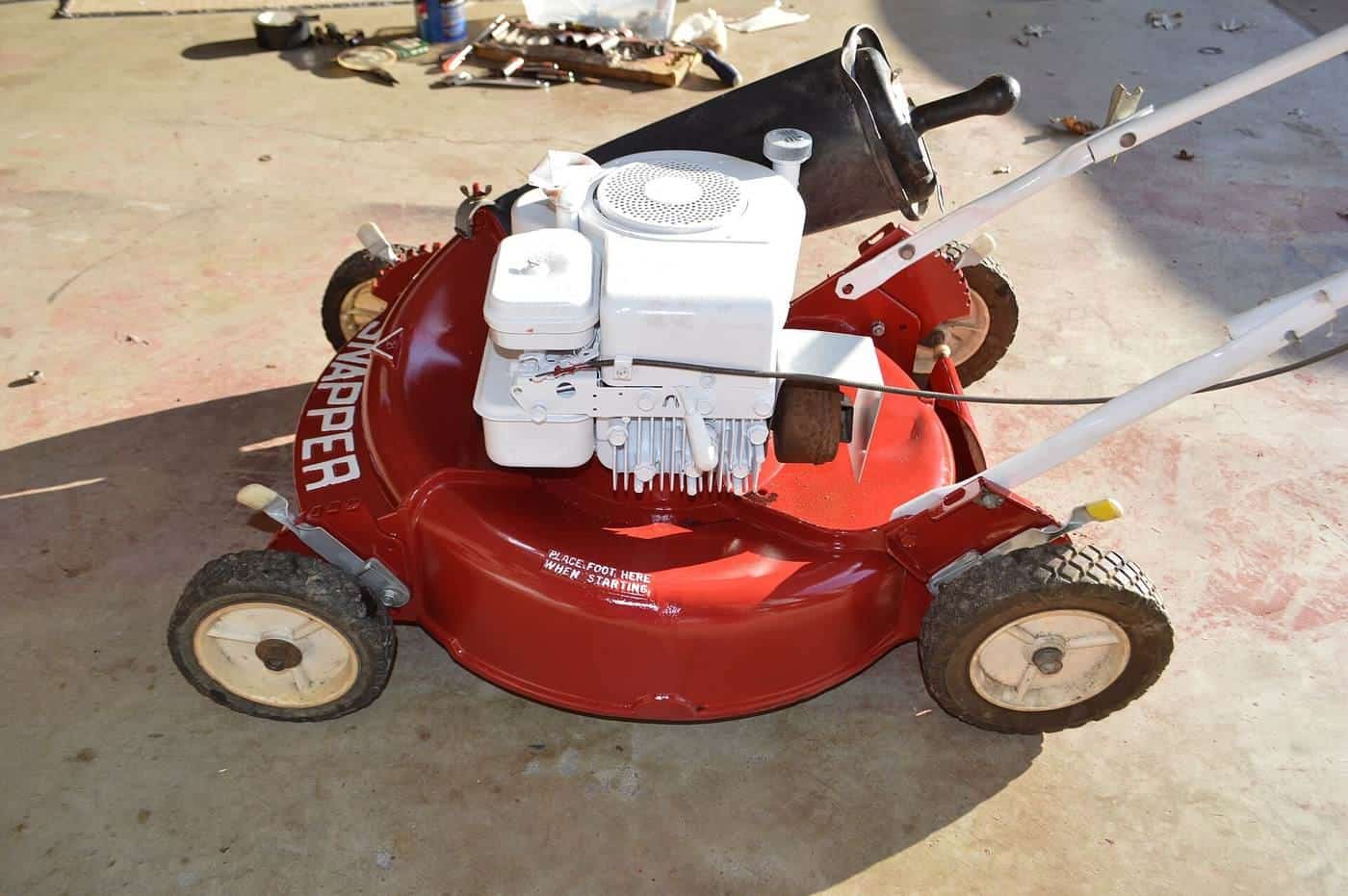
Most petrol mower problems come down to a handful of simple things: old oil, a dirty air filter, a worn spark plug, stale fuel and a blunt blade. You don't need to be a mechanic to sort them out. With a few basic tools, the parts specified in your manual and an hour on a Saturday, you can give your mower a service that will make it start more easily, run more smoothly and cut more cleanly. This guide covers the routine jobs on a typical four-stroke walk-behind mower.
Manual first
Your schedule and parts
Engines differ, so follow the manufacturer
Plug off
Before any work on the blade
Disconnect the spark plug lead first
Recycle oil
Never pour it out
Take used oil to a collection point
Before you start
Find your mower's manual, or the engine manual, which may be a separate booklet. If you've lost it, the engine maker's website usually has a downloadable copy; you'll need the engine model number from the label or stamping on the engine. The manual tells you the service intervals, the correct oil type and quantity, the spark plug type and gap, and how to tip the mower safely.
You'll typically need:
- fresh engine oil of the grade in the manual;
- a replacement air filter, or cleaning supplies for a foam filter;
- a new spark plug of the specified type, and a spark plug socket;
- a drain pan and sealed container for used oil;
- gloves, eye protection and rags;
- a scraper or stiff brush for the deck;
- a socket or spanner for the blade bolt, and a block of wood.
Work outdoors or in a well-ventilated area, on a flat surface, with the engine cool. Keep children and pets away.
Step 1: Disconnect the spark plug
Before doing anything else, pull the lead off the spark plug and tuck it away from the plug. This stops the engine starting accidentally if the blade is turned, which can happen because turning the blade turns the engine. It's the single most important safety step in mower maintenance.
Step 2: Change the engine oil
Old oil loses its ability to protect the engine. Changing it is the most important job in the service.
- Run the engine for a minute or two first if the manual suggests it, as warm oil drains more easily, then stop it and disconnect the plug lead.
- Depending on the mower, drain the oil through a drain plug under the deck, or by tipping the mower as the manual instructs so oil runs out of the filler neck into your drain pan. Tip with the air filter and carburettor facing up to stop oil and fuel getting into them.
- Refill with the specified oil to the correct level on the dipstick. Don't overfill: too much oil can cause smoking and other problems.
- Pour the used oil into a sealed container for recycling.
The Australian Government's used oil recycling program exists because used oil can be recycled into new products. Never pour used oil down drains, into the garden or into the rubbish. Take it to a used oil collection point, such as a council waste facility.
Step 3: Clean or replace the air filter
The air filter stops dust and grass entering the engine. A clogged filter starves the engine of air, making it hard to start, smoky and weak.
- Paper filters are usually replaced, not cleaned. Tapping out loose dust can help between services, but replace a filter that's dirty, oily or damaged.
- Foam filters can often be washed in warm soapy water, rinsed, squeezed dry and, if the manual says so, lightly oiled before refitting.
Clean the filter housing before refitting, and make sure the filter seals properly so no air bypasses it.
Step 4: Check or replace the spark plug
A worn or fouled spark plug makes starting difficult.
- Remove the plug with a spark plug socket.
- Look at the tip. A light tan or grey colour is normal. Heavy black soot, oily deposits or a worn electrode suggest it's time for a new one.
- Check the gap with a feeler gauge against the manual's specification, or simply fit a new plug of the correct type, checking its gap.
- Screw the plug in by hand first to avoid cross-threading, then tighten firmly as the manual specifies. Don't over-tighten.
Leave the lead disconnected until you've finished working on the blade.
Step 5: Deal with the fuel
Petrol doesn't keep forever. Fuel left in a mower or can over winter can go stale and leave gummy deposits in the carburettor, a common reason mowers won't start in spring.
- Use fresh fuel of the type the manual recommends.
- Buy only as much as you'll use in a reasonable period.
- If the mower will be stored for a long time, follow the manual: many recommend running the tank empty or using a fuel stabiliser.
- Store fuel in an approved container, away from ignition sources and out of reach of children, and never inside the house.
Refuel outdoors with the engine stopped and cool, and wipe up spills before starting.
Step 6: Clean the deck and check the blade
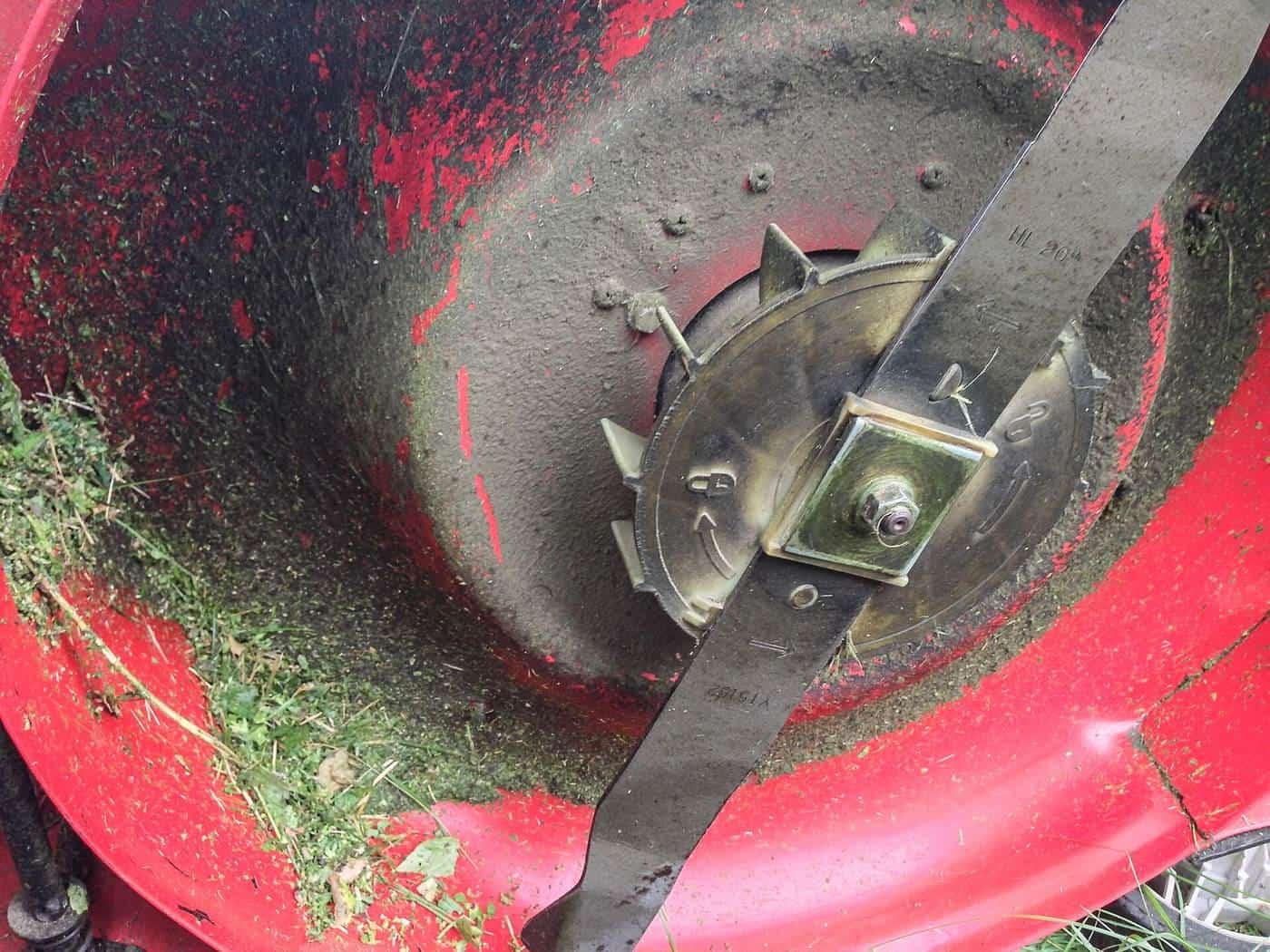
Grass packed under the deck holds moisture and causes rust, and it disrupts the airflow that lifts grass to the blade and pushes clippings into the catcher.
With the plug lead still disconnected, tip the mower as the manual instructs and scrape out the caked grass. Inspect the blade: it should be straight, securely bolted and free of cracks. Wear thick gloves, as blades are sharp even when blunt.
If the blade is blunt, nicked or bent, remove it for sharpening or replacement. Our blade sharpening guide explains how. A bent blade should be replaced, not straightened.
Step 7: Check the rest
- Wheels: check they spin freely and the height adjusters lock.
- Grass catcher: look for tears and blocked mesh, which reduce airflow.
- Cables and controls: check the throttle, blade brake and self-propel cables move freely and aren't frayed. The blade control lever should stop the engine or blade promptly when released.
- Bolts: tighten any loose handle and body bolts.
- Pull cord: replace one that's frayed.
Step 8: Reconnect and test
Reconnect the spark plug lead, set the mower on flat ground and start it as the manual describes. It should start within a few pulls and settle to a steady speed. Do a short test mow, listening for unusual vibration, which may indicate an unbalanced or bent blade.
A simple service record
Keeping a note of what you did and when makes it easier to stay on schedule and adds value if you ever sell the mower.
| Date | Hours or season | Oil | Air filter | Spark plug | Blade | Notes |
|---|---|---|---|---|---|---|
| Changed / checked | Cleaned / replaced | Checked / replaced | Sharpened / replaced |
Troubleshooting common problems
| Problem | Things to check |
|---|---|
| Won't start | Fresh fuel, choke or primer use, spark plug, air filter, blade control lever engaged |
| Starts then stops | Stale or contaminated fuel, blocked air filter, fuel cap vent |
| Smokes heavily | Overfilled oil, mower tipped the wrong way, worn engine |
| Vibrates | Bent or unbalanced blade, loose blade bolt, damaged crankshaft |
| Poor cut | Blunt blade, cutting height too low, grass wet, clogged deck |
| Catcher won't fill | Clogged deck or catcher mesh, wet grass, blunt blade |
When to see a repairer
Some jobs are best left to a qualified small-engine repairer:
- carburettor cleaning or rebuilding;
- anything involving the blade brake or safety controls;
- a suspected bent crankshaft, often after hitting a rock or stump;
- low compression or internal engine noises;
- fuel leaks.
A repairer can also give your mower a full service if you'd rather not do it yourself.
Key points
- Always disconnect the spark plug lead before working on a mower.
- Change the oil, clean or replace the air filter and check the plug as your manual specifies.
- Stale fuel is a common cause of hard starting after winter.
- Clean under the deck and keep the blade sharp and balanced.
- Recycle used oil, and store fuel safely away from the house.
Frequently asked questions
How often should I service my petrol mower?
Follow the schedule in your mower or engine manual, which usually sets intervals by hours of use and by season. Many home owners do a full service at the start of the mowing season.
What oil should I use?
Use the grade and type specified in your engine manual. Four-stroke mowers take engine oil in the sump; two-stroke mowers need oil mixed with the fuel at the stated ratio. Never mix them up.
Why won't my mower start after winter?
Stale fuel is a common cause. Fuel can deteriorate when left for months, gumming up the carburettor. Fresh fuel, a clean air filter and a good spark plug fix many starting problems.
How do I dispose of old engine oil?
Never pour it down drains or onto the ground. Take it in a sealed container to a used oil collection point, such as a council recycling centre or participating service station or retailer.
Is it safe to tip a mower on its side?
Only the way the manual says. Tipping the wrong way can let oil into the air filter or carburettor, or fuel to leak. Many manuals say to tip with the spark plug facing up.
Sources and further reading
Facts on this page were checked against these primary and official sources. Conditions change — confirm before you travel or buy.
- Recycle your used motor oil — Australian Government DCCEEW
- Turning grass into lawn – mowing tips — Turf Queensland
- Lawn care — Queensland Government