The lithium-ion battery is what makes a cordless mower work: no fuel, no pull cord, just slot it in and go. It's also an energy-dense pack that can fail dangerously if it's damaged, overheated, charged with the wrong charger or left on charge unattended. Fire services in Australia have been warning about lithium-ion battery fires in homes, and garden tool batteries are part of the picture. The good news is that a few simple habits greatly reduce the risk. This guide draws on Fire and Rescue NSW and NSW Fair Trading advice.
Not overnight
When to charge
Charge while you're home and awake
RCM
Look for the mark
Shows a charger meets Australian standards
Never bin
Old batteries
Use a battery recycling drop-off
Buying batteries and chargers
Safety starts at the shop. Fire and Rescue NSW recommends buying batteries and chargers from reputable manufacturers and retailers, and choosing chargers that comply with Australian standards, shown by the Regulatory Compliance Mark (RCM). Be cautious about very cheap unbranded replacement batteries and chargers, particularly from online marketplaces, as there's no easy way to know how they were made or tested.
For mowers, the safest choice is generally the battery and charger made for your mower or tool system. If you need a replacement, buy the manufacturer's part.
Where to charge
Fire and Rescue NSW suggests:
- charging in a garage or shed, away from living areas and away from exits, where possible, so a fire won't block your way out;
- charging on a hard, non-flammable surface such as concrete or tiles;
- keeping the battery and charger away from things that can burn, such as cardboard, rags, fuel, paint and garden chemicals;
- avoiding direct sunlight and very hot places.
It also recommends having working smoke alarms. If you charge in a garage that's attached to the house, consider whether a smoke alarm in or near the garage is sensible, and check your existing alarms are working.
How to charge
- Use the charger supplied with the battery or a compatible one from the manufacturer.
- Don't charge overnight or while you're out. Charge when you're home and awake.
- Unplug the charger when the battery is full.
- Let a hot battery cool after mowing before charging, if the manual advises.
- Don't cover the battery or charger while charging.
- Keep chargers and batteries dry, and don't charge a battery that's wet.
Signs of trouble
Stop using a battery and keep it away from anything flammable if you notice:
- swelling or bulging;
- leaking;
- cracks, dents or punctures;
- unusual heat while charging or in use;
- strange smells, hissing, popping or smoke.
Fire and Rescue NSW advises against using damaged batteries. A battery that's been dropped hard, crushed or got wet may be damaged inside even if it looks fine. If in doubt, contact the manufacturer.
If a battery catches fire, get everyone out, close the door if you can do so safely, and call Triple Zero (000). Lithium-ion battery fires can be intense and hard to put out.
Storing batteries in the off-season
Many Australian lawns slow down or stop growing in the cooler months, so cordless mowers can sit for weeks or months. How you store the battery matters:
- Follow the manual's advice on charge level for storage. Many manufacturers recommend storing lithium-ion batteries partly charged, rather than completely full or completely flat.
- Remove the battery from the mower for storage.
- Store it somewhere cool and dry, away from direct sun and extreme heat, out of reach of children, and away from flammable materials.
- Check it occasionally and top up the charge if the manual recommends it.
- Don't store batteries where they could get wet, crushed or knocked off a shelf.
Getting the most life from a battery
Lithium-ion batteries gradually lose capacity with age and use. To get the best life:
- avoid exposing them to high heat, such as a hot car boot or a sunny bench;
- follow the manual on charging and storage;
- keep the contacts clean;
- don't run the mower until it stalls in heavy grass; raise the cutting height or mow more often instead;
- keep the blade sharp, as a blunt blade makes the motor work harder. See sharpening mower blades.
Recycling old batteries
Never put lithium-ion batteries in household rubbish or recycling bins. Fire and Rescue NSW warns that batteries in bins can be crushed in garbage trucks and at waste facilities, causing fires.
Instead:
- Take undamaged batteries to a battery recycling drop-off point, often found at hardware stores, supermarkets, council facilities and some retailers. Tape over the terminals first.
- Take damaged batteries to a facility that accepts them. In NSW, Fire and Rescue NSW points to Community Recycling Centres and Household Chemical CleanOut events. Check your local council for options in other states.
Robot mowers and charging stations
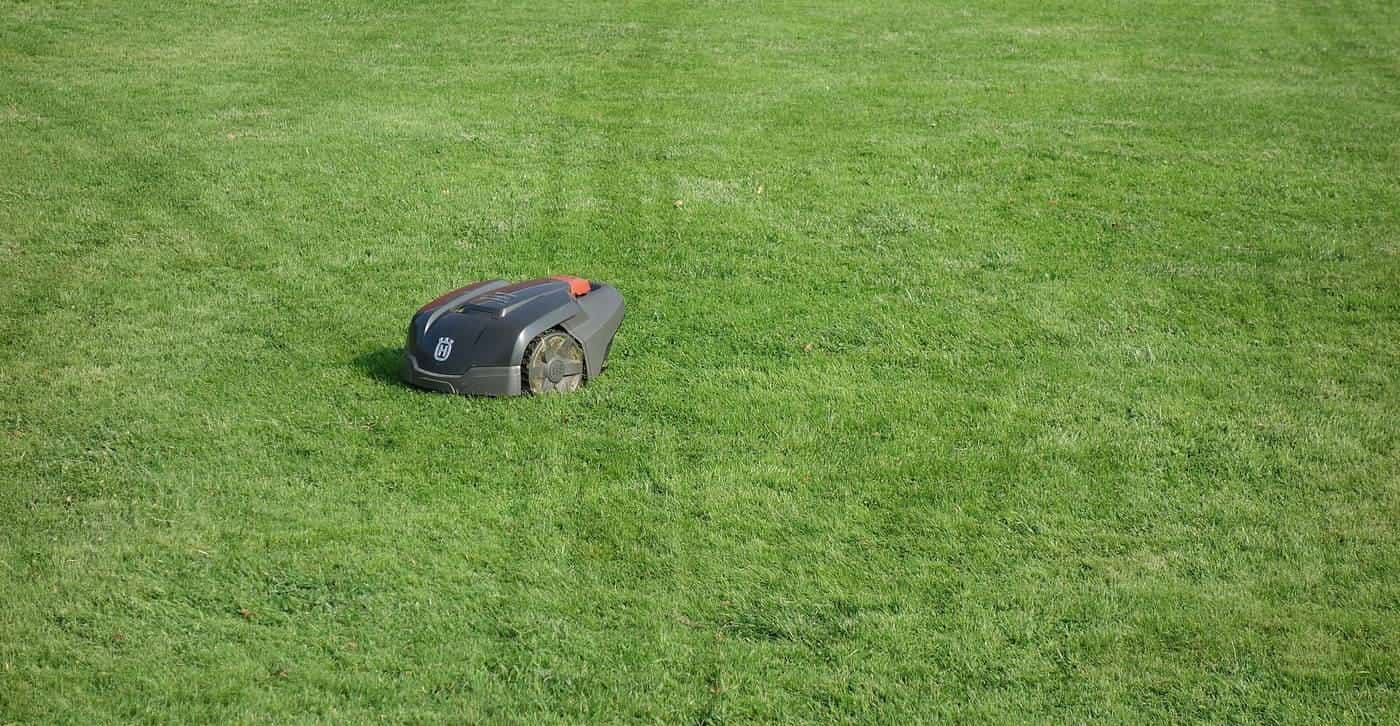
Robot mowers charge themselves at a base station, usually outdoors. Install the base station and power supply exactly as the manufacturer instructs, keep the power supply protected from water as directed, and use only the supplied parts. Watch for the same warning signs of battery trouble. See our robot mower guide.
Ride-on starter batteries
Petrol ride-on mowers usually have a small lead-acid starter battery, like a car. These have different hazards, including acid and hydrogen gas while charging. Follow the manual, charge in a ventilated area with a suitable charger and recycle old ones at a battery recycling point; lead-acid batteries are widely accepted at automotive and council facilities.
Quick reference
| Do | Don't |
|---|---|
| Use the supplied or a compatible RCM-marked charger | Use cheap unbranded chargers |
| Charge on concrete or tiles in a garage or shed | Charge on a bed, couch or carpet |
| Charge when you're home and awake | Charge overnight or while out |
| Store cool, dry and partly charged as the manual advises | Leave it in a hot car or full sun |
| Recycle at a battery drop-off | Put batteries in household bins |
| Stop using swollen or damaged batteries | Keep using a battery that's hot or bulging |
Travelling with mower batteries
If you mow more than one property, or take a battery to a holiday house, transport it carefully. Carry batteries in a sturdy box or bag where they can't be crushed, punctured or short-circuited by loose tools and metal objects. Keep them out of direct sun, and never leave them in a hot car or ute tray for long periods. If a battery has been dropped from a height or hit hard in transit, inspect it closely before charging and stop using it if you see any damage. When you get home, let the battery reach a comfortable temperature before putting it on the charger.
Key points
- Buy reputable batteries and RCM-marked chargers, ideally from the mower's manufacturer.
- Charge on a hard, non-flammable surface away from exits, and not overnight or while out.
- Stop using batteries that are swollen, damaged or overheating.
- Store batteries cool and dry over winter, following the manual on charge level.
- Recycle batteries at a drop-off point; never put them in a bin.
Frequently asked questions
Can I leave my mower battery on the charger overnight?
Fire and Rescue NSW advises against charging batteries overnight or while you're out. Charge when you're home and awake, and unplug when the battery is full.
Where's the best place to charge a mower battery?
Fire and Rescue NSW suggests charging in a garage or shed away from living areas and exits where possible, on a hard, non-flammable surface, away from anything that could burn.
Can I use a cheaper charger from another brand?
Use the charger supplied with the battery, or a compatible charger from the manufacturer. Fire and Rescue NSW advises chargers that comply with Australian standards, shown by the Regulatory Compliance Mark (RCM).
What are the warning signs of a failing battery?
Swelling, leaking, cracks, dents, unusual heat, strange smells, hissing or popping. Stop using it straight away and keep it away from anything flammable.
Can I put old batteries in the bin?
No. Batteries in household bins and recycling trucks can start fires. Take them to a battery recycling drop-off point, taping over the terminals of undamaged batteries.
Sources and further reading
Facts on this page were checked against these primary and official sources. Conditions change — confirm before you travel or buy.
- Lithium-ion batteries – shop, charge and recycle safely — Fire and Rescue NSW
- How can I recycle my used batteries? — Fire and Rescue NSW
- Lithium-ion battery safety — NSW Fair Trading